

High Commissioner for Refugees
President’s Letter
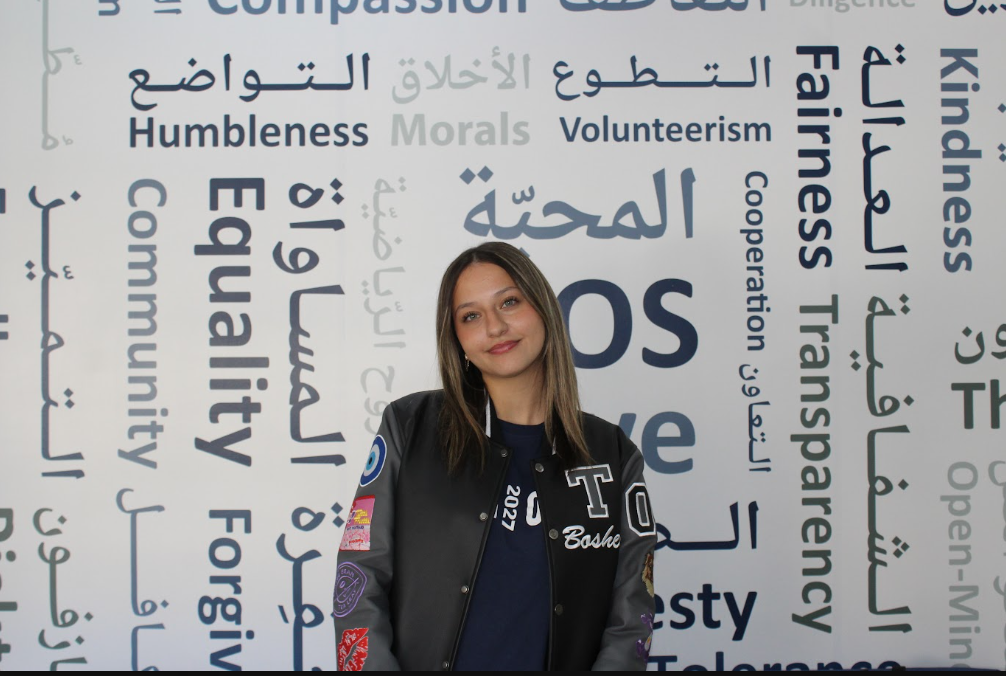
Dear Delegates,
Welcome to the United Nations High Commissioner for Refugees (UNHCR)
I am truly excited to have you all as part of this committee and look forward to seeing what each of you brings to the table. Over the course of this conference, you will have the opportunity to exchange perspectives, question existing approaches, and work alongside fellow delegates towards meaningful solutions.
UNHCR is a committee that deals with issues that extend far beyond borders and politics. It focuses on individuals whose lives have been affected by displacement, conflict, and uncertainty. As delegates, you will be challenged to consider different circumstances, understand opposing perspectives, and explore how the communities can better respond to these challenges.
I hope you approach this experience with confidence and an open mind. Remember that there is no need to have all the answers before entering the committee. What matters is your willingness to contribute, listen, and learn. Whether you are an experienced delegate or attending your first conference, I encourage you to make the most of every opportunity and never hesitate to take part in the discussion.
My wish for you is that you leave this committee with more than just a better understanding of diplomacy, I hope you gain experiences, friendships, and memories that stay with you long after NOSMUN’27 comes to an end.
I look forward to meeting you all and witnessing what we will accomplish together.
See you soon!
Toleen Bosheh,
President of UNHCR
Topic 1: Rehauling the System of Protection of Internal Refugees in Active Conflict Zones
Each year, millions of civilians are forcibly displaced from their homes without ever leaving their country of origin. They are commonly known as internally displaced persons (IDPs), or “internal refugees”, as they have not crossed an internationally recognized border.
Consequently, they do not fall under the protection of the 1951 Refugee Convention, nor is there a dedicated global treaty specifically designed to protect them. Instead, they remain dependent on their national governments for protection and assistance, even when those governments lack the capacity to adequately support them. The scale of this crisis is staggering. By the end of 2025, more than 82 million people were internally displaced worldwide. One of the most prominent examples is the Sudanese Civil War, which has forced approximately 9.1 million civilians from their homes.
Internal displacement is driven by numerous factors, including intentional attacks against civilians, weak governance, discrimination, and restrictions on humanitarian access. It frequently results in the loss of homes, land, legal documentation, and livelihoods. Women and children face particularly severe risks including violence, food insecurity, lack of electricity and disruptions to their education. Furthermore, displacement is often prolonged, as the persistence of adverse conditions prevents individuals from returning home, making repeated or long-term displacement increasingly likely.
Experts highlight that international enforcement and accountability mechanisms remain limited. States hold considerably different positions on the issue: some emphasize national sovereignty and the primary responsibility of governments to protect their own citizens, while humanitarian organizations advocate for stronger international obligations, improved accountability, and unrestricted humanitarian access to affected populations.
Topic 2: Discussing the Protection and Extent of Integration Refugees are Entitled to Worldwide
Integration is the process through which refugees become part of the society that hosts them, including legal status, education, healthcare and social acceptance. The 1951 Refugee Convention is the main source of refugees’ rights as it prevents refugees from returning to adverse or possibly dangerous conditions. In addition, it also sets out rights to work, education, freedom of movement and access to legal institutions. Although states may add conditions or make considerations to these rights, what refugees receive in practice could differ significantly from one country to another.
At the end of 2025, there were 41.6 million refugees worldwide, and about 68% lived in developing nations. UNHCR estimates that one-third of refugees live in countries that restrict freedom of movement, and a 2022 study discovered that more than 55% lived in nations that restrict work rights in practice. Integration is often limited by various concerns about the competition for jobs and services, limited resources in host countries, reductions in aid and policies that keep refugees in camps. Where refugees cannot work legally, many work informally, which brings lower pay and less legal protection.
Research suggests that refugees often contribute significantly to host countries when they are given the rights to work and move freely, although other research has indicated that inclusion can add a significant amount of strain on the resources of developing nations’ communities. Previous initiatives such as the Global Compact on Refugees and national models such as Uganda’s self-reliance approach have tried to share responsibility and further expand refugees’ rights, but they are mostly voluntary and heavily depend on external support to function optimally. States also hold different positions on the matter. Some countries argue that a state’s primary obligation is to protect the interests, culture, security, and sovereignty of its existing citizens above all external humanitarian duties whilst prioritizing national security and local employment, while the UNHCR and many non-governmental organizations argue that work rights and freedom of movement benefit both refugees and host communities.
Study Guides
Delegate’s Guide