

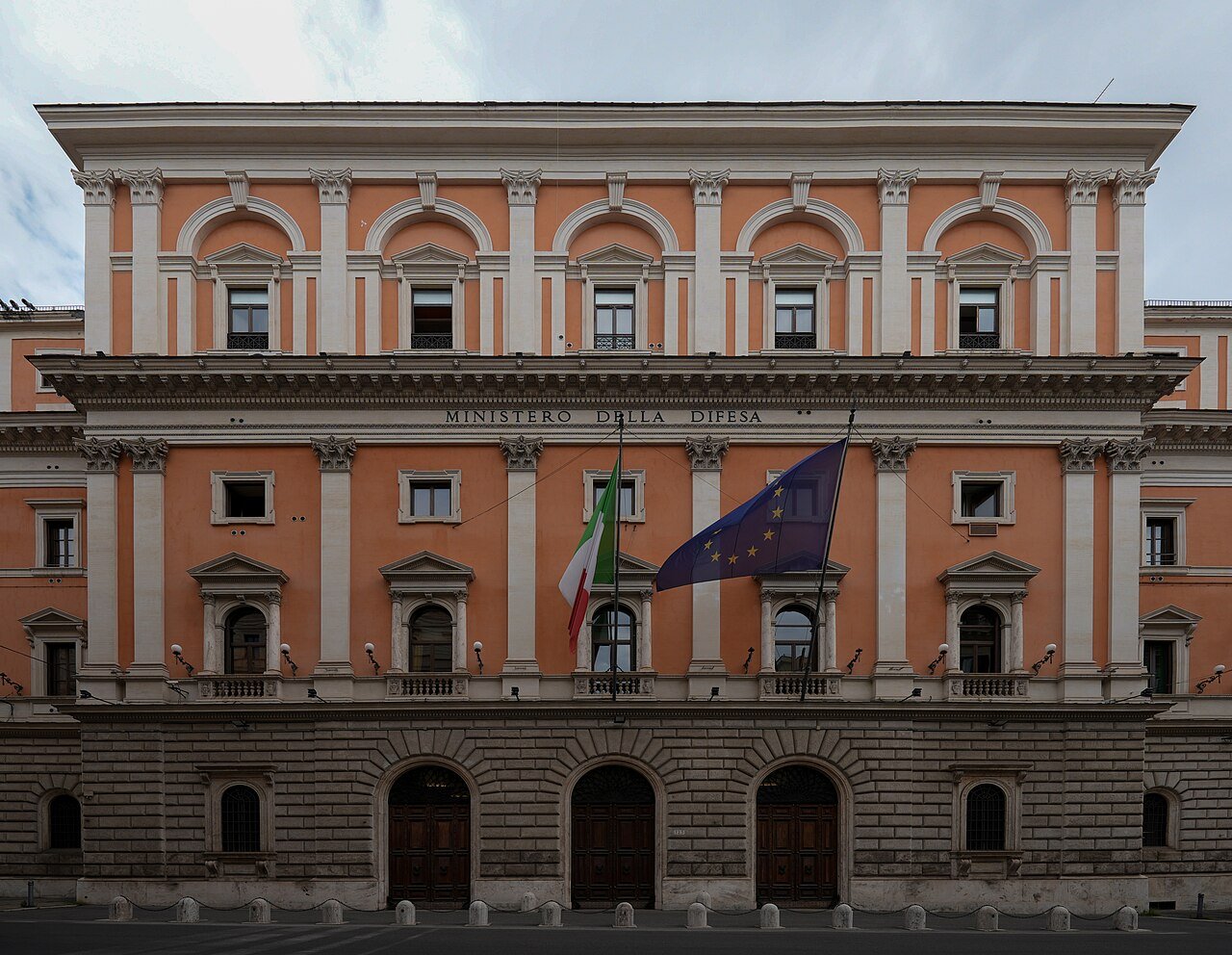
The Italian Ministry of War
President’s Letter

Esteemed Delegates,
My name is Raed Asali, and I am extremely honoured to be serving as the President of the Italian Ministry of War, as well as being the Deputy Head of Crisis for NOSMUN’27.
Resistance has been a defining feature of our history. From the days of Roman rule to even the present day, people across Europe, the Middle East and North Africa have consistently been subjected to relentless foreign occupation by different parties. Very few individuals have come to embody resistance to such rule as profoundly as Libyan resistance leader Omar Al-Mukhtar.
"I never submitted to the Italian government: I only had conversations with it." - Omar al-Mukhtar, 15 September 1931.
Yet, history has repeatedly demonstrated that military conquest does not necessarily always equate to lasting control. Italy’s struggle to establish and maintain its colonial rule over Libya spanned more than two decades, only for Italian control to be lost during the Second World War in 1943, merely 11 years after the official pacification. From North Africa to the capitals of Europe, the struggle for freedom has rarely ever been confined within the borders of a single state. The rise of resistance movements across the Mediterranean region, each with its own aspirations and agendas, has always challenged the established balance of power.
Delegates, within this committee you will be the ones to dictate the future of both the European and Arab worlds; you will be the ones to redefine what it means to have freedom and independence not only as a nation, but as a people across the entire Mediterranean. You will represent the confrontation between the opposing forces of liberty and conquest. So, Whether you aim to subjugate or resist, You will change the course of history as we know it.
Topic: The Revolt for the Russian Empire: Bolsheviks, Whites, and Greens
The Second Italo-Senussi War was a colonial conflict between the Kingdom of Italy and Libyan resistance movements, primarily led by the Senussi Order, between 1923 and 1932.
Following Italy’s invasion of Libya prior to World War I in the 1911 First Italo-Senussi War, Italian forces remained largely concentrated along the Libyan coastline, the interior being governed by various local groups. The rise of Benito Mussolini and his Fascist government in 1922 brought upon renewed aggressive efforts to establish complete Italian control over Libya, which led to an 8 year war between the Senussi Order and the Kingdom of Italy.
Italy had previously maintained agreements with the Senussi leadership, particularly Idris al-Senussi, who was recognised as Emir of Cyrenaica in 1920. However, growing tensions between the Italian government and Libyan nationalists undermined these agreements. In 1922, Idris fled to Egypt following increasing Italian pressure. Following that, in 1923, Italy launched a campaign to reconquer the interior, encountering significant resistance by Omar al-Mukhtar and his forces.
Italian forces initially concentrated on securing Tripolitania and Cyrenaica. Although they gained control over much of Tripolitania, resistance in Cyrenaica proved considerably more difficult as under Omar al-Mukhtar, Libyan resistance continued for almost a decade. Italy increasingly relied on military occupation, restrictive colonial policies, mass killings and laws to consolidate its authority. Italy implemented harsh measures to ensure victory such as mass deportations, concentration camps, restrictions on civilian movement and the mass murder of civilians via genocide to instill terror to weaken resistance. By 1931, Italian forces had captured the remaining major resistance strongholds. Omar al-Mukhtar was captured and executed in September 1931. In 1932, Italy officially declared the pacification of Libya complete.
Study Guide
Delegate’s Guide