

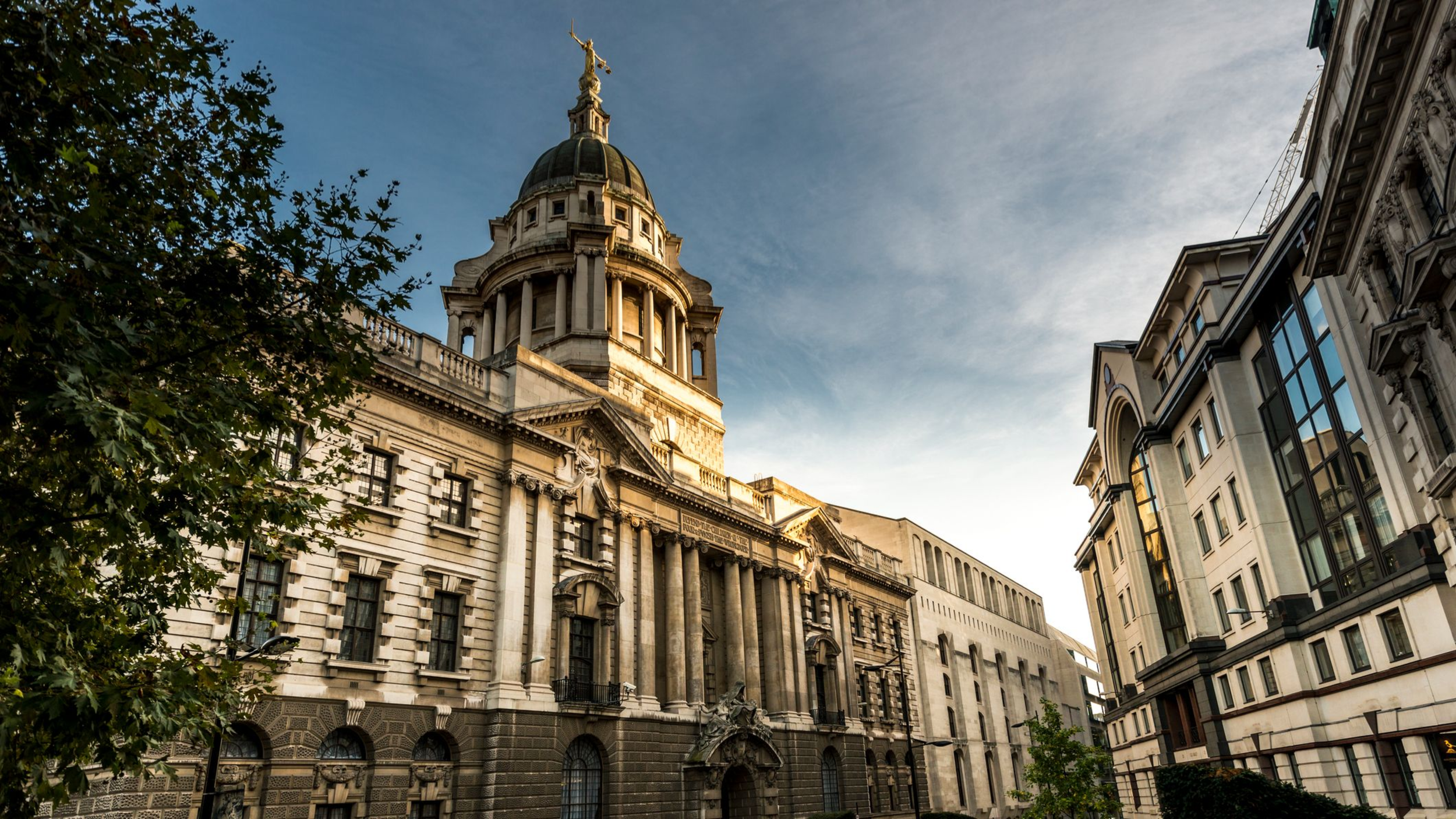
The Crown Court
Old Bailey: The stage Where Power Stands Trail
President’s Letter

Position: Deputy Head of Crisis
Experience: My last
Dear advocates of The Crown Court,
When the gavel is raised, authority is no longer assumed, it is placed under the spotlight. It is my distinct honor to welcome you to The Crown Court at NOSMUN’26. My name is Laith Nahhas, and I will be serving as your President for this year's court committee. Over the course of the 3 days, you will operate as seasoned legal advocates within one of the most powerful judicial institutions in the British legal system, where precision and strategy are indispensable.
During my time as Deputy Head of Crisis, I had the privilege of building the Crown Court committee from the ground up, establishing its procedural framework and refining its standards. Through the time, effort, and detail invested in organizing this committee, I have grown to deeply appreciate its complexity and significance, and I hope that the work behind its structure is reflected in your experience within the courtroom.
Inside this courtroom, you will deliberate on two historically significant cases: Case I: Rex v Clarence Hatry and Case II: Rex v Thomas Style. These cases are not merely legal disputes; they are direct confrontations with power, influence, and privilege. Each defendant occupied a position of authority, whether economic, social, or institutional, raising a central question that lies at the heart of this committee: when power is abused, who has the authority to hold it accountable?
This is where our overarching theme, “The Theatre of Power,” becomes most visible. The Crown Court, particularly the Old Bailey, acts as a literal and symbolic stage upon which power stands trial. Behind its walls, reputations collapse, authority is questioned, and those once shielded by wealth or status are subjected to the same legal scrutiny as any other citizen. In Rex v Hatry, financial power and public trust are exposed as fragile illusions. In Rex v Style, institutional credibility and moral authority are tested before the court. In both cases, the courtroom transforms into a theatre where evidence is key. As advocates, you are not passive observers of this theatre, you are its actors. Your arguments will determine whether power is restrained or excused, dismantled or defended.
The outcomes in the Crown Court are not predetermined. “Clarence Hatry and Thomas Style were found…” The verdicts and the fate of the sentences that follow lie solely in your hands.
I look forward to observing the strategic depth and intellectual discipline you bring to the courtroom. Prepare well, argue decisively, and remember that in this court, every word is an exercise of power.
See you all in January!
Laith Nahhas
President of The Crown Court
Case 1: Rex v Clarence Hatry
Clarence Hatry was a well-known British financier who rose to become one of the most prominent corporate individuals in the 1920s. Born on December 16, 1888, in London, he controlled a wide variety of companies, investment trusts, industrial groups, and insurance. Nevertheless, his public reputation fell apart when he was accused of falsified financial practices, such as overly inflated company valuations, in order to secure various loans and acquisitions.
Hatry’s downward spiral began in September 1929, when he wanted to buy out and gain control of United Steel, an industry firm in London. Lacking the funding and capital to fund the takeover, Hatry and his business partners and associates allegedly resorted to using fraudulent stock certificates as backing. However, when financial investigators investigated Hatry’s dealings, they uncovered his forgeries, and thus his empire toppled overnight. This eventually led to the Wall Street Crash due to a decrease in British market confidence and global financial instability.
The British government claims the primary issue was Hatry’s deception of investors, arguing that the manipulation he committed undermined the authenticity of national markets. Nonetheless, speculative financing was very common during this timeframe, so many argue Hatry was simply operating within the standards of the high-risk investment of that era and did not intend to cause the financial harm that followed the scandal. Hatry was arrested after the scandal and awaits trial at the Old Bailey.
Case 2: Rex v Thomas Style
Thomas Style, a senior officer in the Surrey police who held the title of Detective Chief Inspector at the time, was involved in the investigation of the Guildford pub bombings in October 1974. The bombings were a coordinated barrage of explosions carried out in the Horse and Groom and the Seven Stars pubs in Guildford, killing five people and injuring dozens more. The Surrey police force was suddenly pressured to apprehend suspects, as the case quickly grabbed national attention. Eventually, the police force arrested four individuals who were later named as the Guildford Four. The four confessed to the bombings, and their confessions were a primary basis of evidence for the case, despite a clear lack of reliable physical evidence.
However, the convictions of the Guildford Four were quashed in 1989 due to the emergence of news that the confessions made by the four individuals were coerced and lacked physical evidence backing them up. As Detective Chief Inspector, Style played a major role in overseeing interrogations of the Guildford Four, reviewing investigative notes and reports, and directing a proper investigation strategy. It’s claimed that Style and other officers have allegedly subjected the four suspects to prolonged, intense periods of questioning, used psychological intimidation during questioning, restricted legal counsel rights from the four, and altered statements and notes to create an apparent appearance of guilt.
On one hand, critics argue that the Surrey police force was operating during a very stressful period due to the widespread IRA bombings taking place. Therefore, detaining suspects and believing the confessions was the correct step to reduce further terrorist attacks, and all events aligned with counterterrorism standards. On the other hand, other critics argue that the police force was abusing the power they had, using their hierarchy to manipulate statements to produce desired confessions. DCI Thomas Style now awaits trial at the Old Bailey.
Study Guide
TCC Guide 2026
Delegate’s Guide